Shin Splints: Causes, Symptoms & Treatment in Dwarka, Delhi
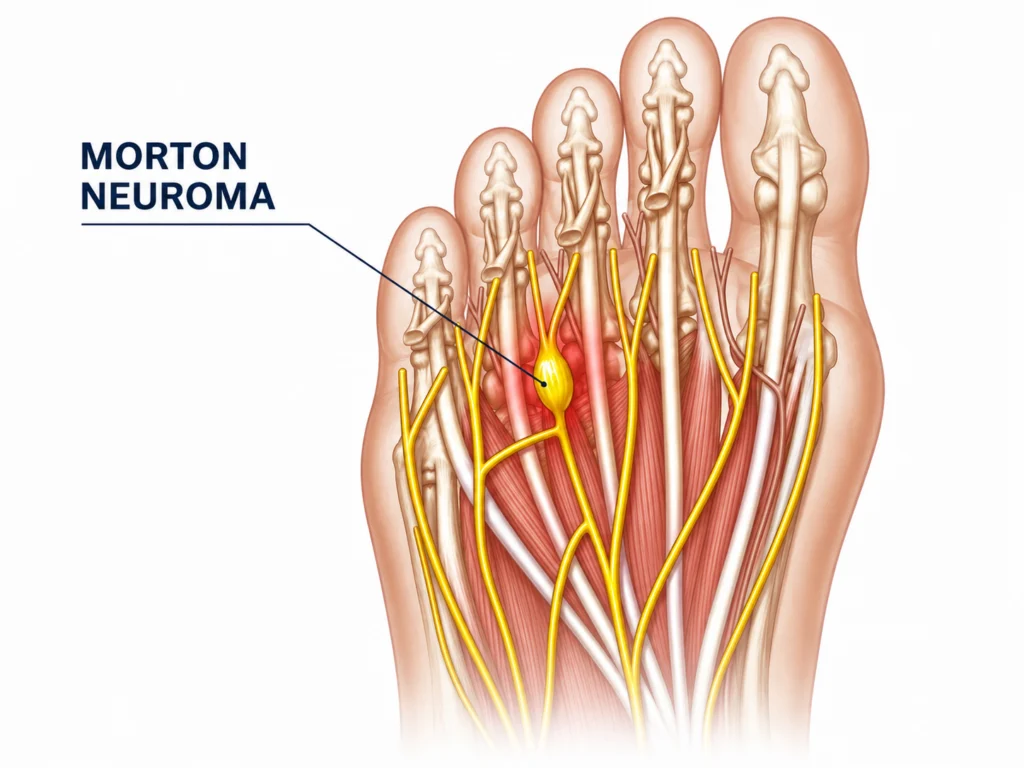
site of formation of morton's neuroma

What Are Shin Splints?

Shin splints — medically known as medial tibial stress syndrome — are pain along the tibia, the large bone running down the front of your lower leg. The pain develops when the muscles, tendons, and tissue attached to the shin bone become irritated from repeated stress, most often from running, jumping, dancing, or other high-impact activity.
It's one of the most common overuse injuries in athletes, especially runners and those in military training. Most people recover fully with rest and simple self-care — but shin splints that get ignored can progress into something more serious: a stress fracture, which takes considerably longer to heal.

Symptoms to Watch For

  • Dull, aching, or sharp pain along the front or inner edge of the shin
  • Shin tenderness or soreness to the touch
  • Mild swelling in the lower leg
  • Pain that initially comes and goes with activity, then becomes more persistent and lingers even after stopping
  • Pain that eases with rest in the early stages

If the pain becomes constant, sharply localised to one spot, or doesn't respond to rest, it may indicate the injury has progressed toward a stress fracture rather than remaining a simple shin splint — this distinction matters for how it's treated.

What Causes Shin Splints

  • Sudden increases in activity — starting a new running program, or increasing intensity, duration, or frequency too quickly
  • Running surfaces — hard, uneven, or hilly terrain increases stress on the shin
  • Unsupportive or worn-out footwear
  • Foot structure — flat feet, high arches, or very rigid arches change how your legs absorb impact
  • Insufficient recovery time between training sessions
  • Underlying bone health factors — vitamin D deficiency, osteopenia, osteoporosis, or conditions affecting menstrual cycle and bone density can weaken resistance to repetitive stress

When to See a Podiatrist

  • Shin pain that doesn’t improve after a few weeks of rest and self-care
  • Pain that’s severe, sharply localized, or getting worse rather than better
  • Noticeable swelling, redness, or warmth in the lower leg
  • Pain that persists even with activities that previously felt fine

A proper exam matters here because shin splints and stress fractures can feel similar in the early stages — but they need different recovery timelines and treatment approaches. Continuing to train through what feels like a "normal" shin splint risks turning it into a fracture that takes months, not weeks, to heal.

How Shin Splints Are Diagnosed

A podiatrist will review your training history, examine your gait, and check for tenderness along the shin bone. Standing or hopping on the affected leg can help distinguish shin splints from a stress fracture. If a fracture is suspected:

  • X-ray is usually the first step, though a significant portion of stress fractures don’t show up on plain X-rays
  • MRI or bone scan may be used when a fracture is suspected but not visible on X-ray, since these detect the injury earlier

Treatment Options

Most people recover within three to six weeks with conservative care.

Conservative care (first-line)

  • Rest — reducing or pausing high-impact activity to let the tissue heal; low-impact cross-training like swimming or cycling can maintain fitness in the meantime insoles or metatarsal pads — placed just behind the affected area to offload pressure on the nerve, rather than over it
  • Ice — applied for 15–20 minutes several times a day during the acute phase
  • Pain relief — over-the-counter anti-inflammatory medication, used at the lowest effective dose
  • Custom orthotics or shoe inserts — particularly helpful for flat feet or arch-related mechanical causes, redistributing stress away from the shin
  • Footwear replacement — worn-out or unsupportive shoes are a common contributing factor
  • Gradual return to activity — resuming training only after being pain-free, and increasing load slowly (a common guideline is no more than a 10% increase in weekly activity)
  • Guided stretching and strengthening — for the calves, ankles, and hips, to reduce recurrence risk

Prevention

  • Increase training volume gradually — avoid sudden jumps in distance, frequency, or intensity
  • Consider custom insoles or arch supports, especially if you have flat or high arches
  • Replace running shoes regularly (roughly every 350–500 miles), and choose footwear matched to your foot type
  • Warm up before activity and stretch afterward
  • Favor softer, even surfaces over concrete or hilly terrain where possible
  • Build strength in the legs, ankles, hips, and core to better tolerate repetitive impact
  • Treat pain as a signal to scale back, not push through

Frequently Asked Questions

How long do shin splints take to heal?

Most people recover in three to six weeks with rest and appropriate care. Recovery can take longer if activity continues without adequate rest, or if the injury has progressed toward a stress fracture.

Can I still exercise with shin splints?

Low-impact activity like swimming or cycling is usually fine, but high-impact activity that caused the pain should be paused until you’re pain-free. Pushing through the pain risks progression to a stress fracture.

How do I know if it's shin splints or a stress fracture?

Shin splints typically cause diffuse pain along a length of the shin that eases with rest, while stress fractures tend to cause sharp, localized pain that doesn’t improve and may worsen with continued activity. Because the two can be hard to distinguish without imaging, a proper assessment is the only reliable way to know.

Do custom insoles actually help prevent shin splints?

For people with flat feet, high arches, or uneven gait mechanics, custom insoles can meaningfully reduce the repetitive stress placed on the shin — making them a genuinely useful preventive tool, not just symptom management.

At Revamp Healthcare, Dwarka Sector 14, our podiatry team assesses gait and foot structure to identify what's driving recurring shin pain, and prescribes custom orthotics to correct the underlying mechanical cause.

Last Update

Reviewed By Dr Mohit Sharma - Clinical Head, Podiatrist, Foot Care Specialist on 22 July 2026

Book Your Appointment

Book a foot assessment with our team in Dwarka and get a clear answer on what’s causing your pain — and a plan to actually fix it.