Bunion Non Surgical Treament near Gurgaon, Delhi NCR, India
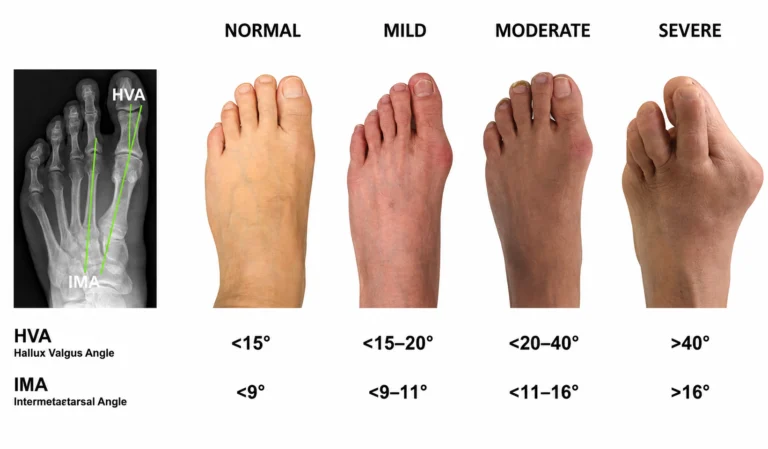
image showing bunion and their progression

What is Bunion

Hallux valgus, commonly known as a bunion, is a progressive deformity of the big toe joint. "Hallux" means big toe, and "valgus" refers to its abnormal angling toward the second toe.
The condition develops as the joint stabilising the first metatarsal weakens, causing the bone to drift outward while the big toe angles inward — often overlapping the second toe. This creates the characteristic bump at the base of the toe. Bunions usually develop gradually. As the bump becomes more prominent, friction from footwear can cause redness, swelling, and pain, and the joint may become prone to bursitis or arthritis over time. 

A similar deformity of the little toe is called a tailor's bunion, or bunionette.

At Revamp Healthcare in Dwarka, we help patients across Delhi NCR manage bunions with Orthotics. We conduct gait analysis, foot pressure mapping, and posture analysis to help reach the root cause of it. Read more about bunions and treatment options available below.

What Causes Bunions ?
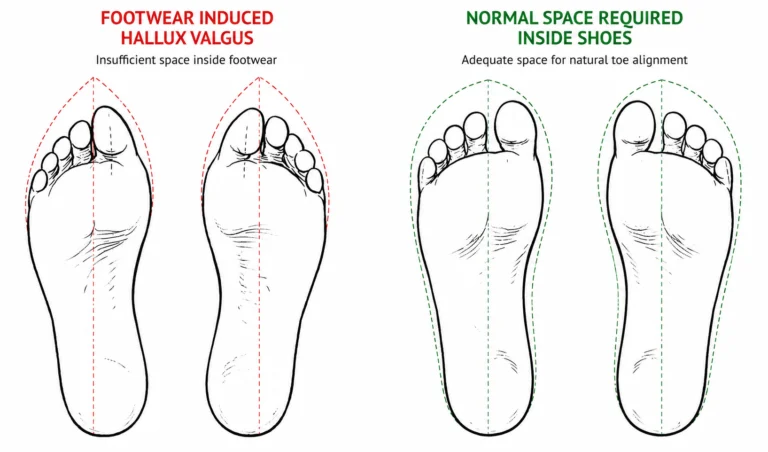
picture showing how footwear can disturb hallux alignment

Bunions typically develop from a combination of factors rather than a single cause:

  • Heredity. Bunions often run in families — having a close relative with bunions increases your own risk, and many adult cases can be traced back to a tendency that started in childhood.
  • Footwear. Tight, narrow, or pointed shoes — including high heels — don’t directly cause bunions, but they place sustained pressure on the toe joint and can significantly worsen an existing genetic tendency.
  • Foot mechanics. Flat feet, a splayed forefoot, or overpronation (excessive inward rolling of the foot) increase pressure on the inner side of the big toe joint, making bunion formation more likely over time.
  • Underlying medical conditions. Conditions such as rheumatoid arthritis can also contribute to bunion development.

Bunions are more common in women and tend to become more prevalent with age. Most cases involve several of these factors together — for example, a hereditary tendency combined with years of tight-fitting footwear.

Clinical assessment of Bunion at Revamp 

A thorough bunion assessment goes beyond simply grading the severity of the deformity — it also needs to identify the underlying biomechanical factors driving it.

Hallux valgus is very often linked with other postural conditions, including flat foot, high arch, knee valgus, foot overpronation, and ankle instability.

These conditions can increase the physiological load on the big toe joint, which is why they're frequently the underlying cause behind bunion formation and progression — making it essential to assess them alongside the bunion itself.

Because of this, an effective assessment looks at the whole kinetic chain, not just the toe itself. Identifying and addressing these contributing factors is important for slowing or preventing further degenerative progression, rather than treating the toe deformity as an isolated problem.

Getting the Right Diagnosis First

Diagnosis of hallux valgus begins with a clinical examination — assessing the visible deformity, joint mobility, and the pattern of pain — and is confirmed with X-ray imaging, which remains the gold standard for diagnosing bunions. X-rays are typically taken with the patient bearing weight on the foot, since this gives the most accurate picture of how the bones are aligned under normal load.


X-rays : From the X-ray, clinicians measure the hallux valgus angle (HVA) — the angle between the big toe and the first metatarsal bone — to confirm the diagnosis and grade its severity. An angle greater than 15–18° is generally considered abnormal, with larger angles indicating more advanced deformity.

Treatment at Revamp

Non-Surgical Treatment: The Role of Orthotics and Footwear

  • Custom insoles to correct underlying mechanics. Since bunions are frequently driven or worsened by biomechanical issues like flat feet or overpronation, a custom insole built around your specific foot structure can help control excess motion, redistribute pressure away from the big toe joint, and reduce the ongoing mechanical load that drives the deformity forward. This addresses the root cause rather than just the symptom.
  • Reducing pain and slowing progression. By correcting alignment further up the chain — at the arch and ankle — custom insoles can ease the abnormal pull and pressure on the big toe joint, helping to reduce pain and potentially slow how quickly the bunion progresses over time.
  • Footwear modification. Since tight, narrow, or poorly fitted shoes place direct pressure on the bunion and accelerate irritation, switching to footwear with a wider toe box, proper arch support, and a lower, more stable heel is one of the simplest and most impactful changes a person can make. Even without other intervention, this alone often meaningfully reduces day-to-day discomfort.
  • Orthotic devices for targeted support. Beyond insoles, additional orthotic aids — such as toe spacers, bunion splints, or padded shields — can help offload pressure from the joint, reduce friction inside the shoe, and ease pain during daily activity, particularly in the earlier or milder stages of the condition.
  • A conservative, individualised approach. At Revamp Healthcare, non-surgical management is tailored to your specific foot mechanics and the severity of your bunion, combining custom insoles, footwear guidance, and — where appropriate — targeted exercises or physical therapy, all aimed at reducing pain and slowing progression without surgery.

Frequently Asked Questions

Can a bunion go away on its own?

No. A bunion does not disappear without treatment. While non-surgical treatments can help relieve pain and slow its progression, the bony deformity itself does not reverse on its own.

What causes bunions?

Bunions commonly develop due to inherited foot structure, abnormal foot mechanics, flat feet, arthritis, or prolonged pressure on the big toe joint. Wearing tight or narrow shoes can aggravate symptoms but is usually not the primary cause.

Can bunions be treated without surgery?

Yes. Many people find relief with conservative treatments such as wider footwear, custom orthotics, bunion pads, toe spacers, activity modification, and physiotherapy. Surgery is usually considered only when pain is severe or daily activities become difficult.

Do custom orthotics help with bunions?

Yes. Custom orthotics help improve foot alignment, reduce pressure on the big toe joint, and distribute weight more evenly during walking. While they cannot correct the bunion, they can reduce pain and slow its progression.

When should I consider bunion surgery?

Surgery may be recommended if your bunion causes persistent pain, difficulty walking, problems finding comfortable footwear, or if conservative treatments no longer provide relief. Your specialist will determine whether surgery is appropriate based on the severity of the deformity and your symptoms.

Can bunions get worse over time?

Yes. Without appropriate management, bunions can gradually become larger, causing increasing pain, stiffness, toe deformity, and difficulty with footwear. Early treatment can help manage symptoms and reduce the risk of progression.

Last Update

Reviewed By Dr Mohit Sharma - Clinical Head, Podiatrist, Foot Care Specialist on 22 July 2026

Book Your Appointment

Book a foot assessment with our team in Dwarka and get a clear answer on what’s causing your pain — and a plan to actually fix it.