Contact Us : +91 9599564689 | Email: info@revamphealthcare.in | Working Hours : Mon-Sat, 10 AM-8PM

Knock Knees (Genu Valgum) Treatment in Dwarka, Delhi NCR
Expert Non-Surgical & Orthotic Treatment for Knock Knees in Children and Adults
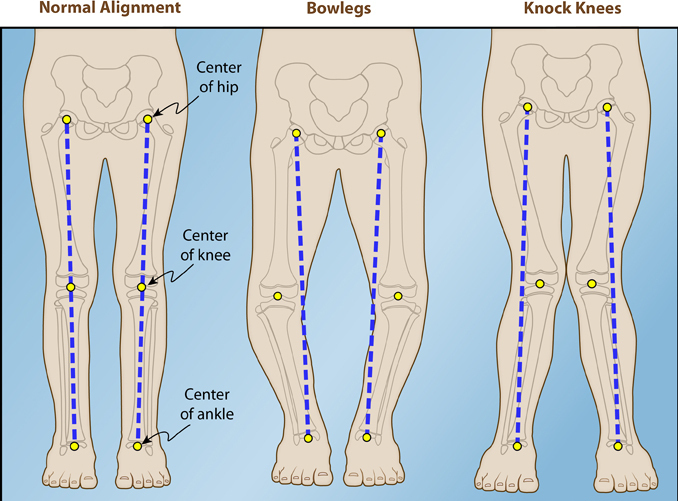
Knock knees, medically known as Genu Valgum, is a condition where the knees angle inward and touch each other while the ankles remain apart. Mild knock knees are a normal stage of development in young children and usually correct naturally. However, persistent or severe genu valgum in older children, adolescents, or adults can lead to pain, abnormal walking, knee instability, and early arthritis if left untreated.
At Revamp Healthcare, we specialize in comprehensive assessment and conservative treatment of knock knees through gait analysis, custom orthotics, corrective bracing, physiotherapy, and biomechanical correction. Our goal is to improve lower limb alignment, reduce pain, enhance walking efficiency, and help prevent future joint degeneration.
What Are Knock Knees (Genu Valgum)?
Knock knees occur when the legs angle inward, causing the knees to touch while standing with the ankles separated. This altered alignment changes how body weight passes through the knee joint, increasing stress on the outer compartment of the knee and affecting the hips, ankles, and feet.
In children between 2 and 6 years of age, knock knees are usually considered a normal developmental stage. Most children naturally outgrow the condition by the age of 7 to 8 years. Persistent genu valgum beyond this age or severe deformity requires professional evaluation.
Signs and Symptoms of Knock Knees
Common symptoms include:
Adults with untreated genu valgum may also experience:
Causes of Knock Knees
Knock knees may occur due to several reasons, including:
Physiological Growth
The most common cause in young children. It generally resolves naturally with growth.
Flat Feet /Overpronation
Collapsed arches can cause the legs to rotate inward, worsening knee alignment.
Obesity
Excess body weight places increased stress on growing bones and joints.
Vitamin D Deficiency & Rickets
Weak bones caused by nutritional deficiencies may lead to genu valgum.
Previous Injury
Growth plate injuries or fractures around the knee can alter normal alignment.
Genetic & Skeletal Disorders
Conditions such as skeletal dysplasia or connective tissue disorders may contribute to severe knock knees.
Arthritis or Bone Infections
One of the important causes in adults.
Risk Factors
When Should You See a Specialist?
Early assessment helps identify whether the condition is developmental or pathological.
Diagnosis of Knock Knees
At Revamp Healthcare, diagnosis begins with a detailed biomechanical evaluation.
Our assessment includes:
The evaluation helps determine whether the deformity originates from the femur, tibia, feet, or multiple segments.
Non-Surgical Knock Knee Treatment
Most patients can be managed successfully without surgery.
Custom Foot Orthotics
Foot alignment significantly influences knee position. Custom orthotics correct excessive pronation, improve lower limb biomechanics, and reduce inward stress on the knees.
Benefits include:
Knock Knee Bracing
Custom knee braces may be recommended in selected children, adolescents, or adults depending on age and severity.
Braces help:
Bracing is most effective when combined with supervised rehabilitation.
Gait Analysis
Computerized gait analysis identifies abnormal movement patterns that contribute to knee deformity.
Physiotherapy
Targeted rehabilitation focuses on strengthening muscles that support proper alignment.
Exercises typically improve:
Weight Management
Reducing excess body weight decreases stress on the knees and improves long-term outcomes.
Footwear Advice
Supportive footwear plays an important role in maintaining proper lower limb alignment, especially when used alongside custom orthotics.
Surgical Treatment
Surgery is considered only when:
Depending on age and severity, surgical options may include:
Our role includes assessment, conservative care, and referral to orthopedic surgeons when surgery is appropriate.
How Can Orthotics Help Knock Knees?
Many patients with knock knees also have flat feet or excessive foot pronation. When the feet collapse inward, the knees rotate inward as well, increasing stress across the knee joint.
Custom orthotics help by: