Corns and Calluses: Causes, Symptoms & Treatment in Dwarka, Delhi
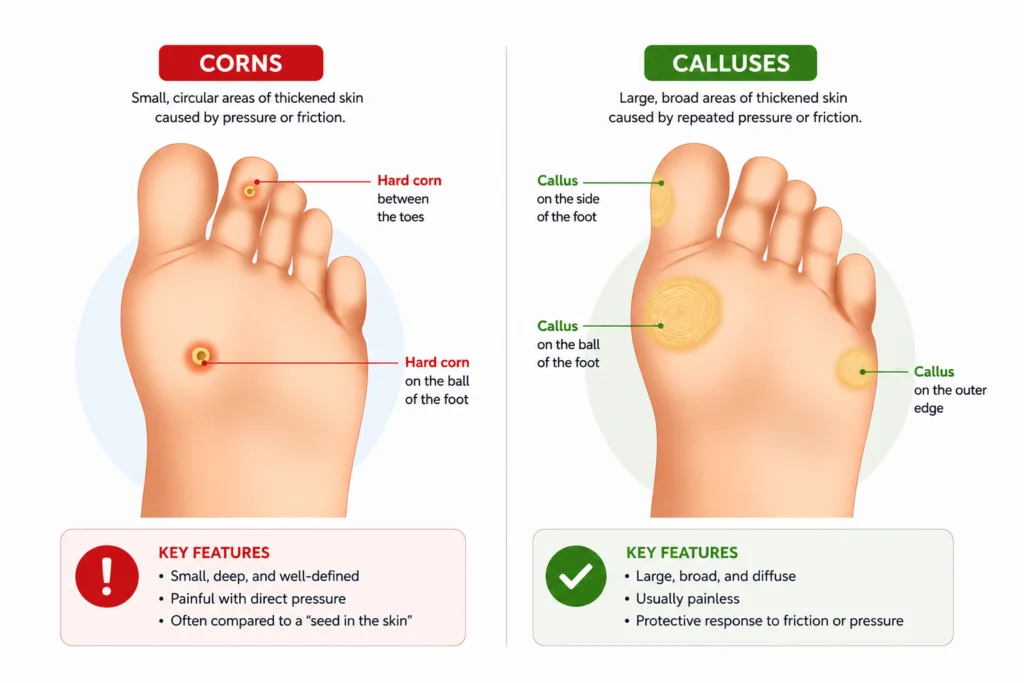
image showing appearance of corn and calluses- a side by side comparison

What Are Corns and Calluses?

Corns and calluses are patches of thickened skin your body builds as a defence against friction or pressure. Left alone, most are harmless. Left untreated in the wrong location — or in someone with diabetes or poor circulation — they can turn into a real problem.

The two are related, but not identical.

  • Corns are small, round, and sharply defined. They form over bony areas — commonly the tops or sides of toes — and press inward, which is why they often hurt more than they look like they should.
  • Calluses are broader, flatter, and less defined. You’ll usually find them on the sole, heel, or ball of the foot — the weight-bearing zones that take the most repetitive load.

Why They Form

Corns and calluses don't appear randomly. They're a response to a specific, repeatable mechanical cause — which is exactly why they keep coming back if that cause isn't addressed.

Common triggers include:

  • Ill-fitting footwear — too tight, too loose, or the wrong shape for your foot
  • Abnormal foot mechanics — a hammer toe, bunion, or uneven gait shifts pressure to areas not built to bear it
  • Repetitive friction — from walking patterns, sports, or standing for long hours
  • Skipping socks or wearing socks that bunch and rub

If the underlying pressure point isn't corrected, trimming the corn or callus only buys temporary relief — it tends to return within weeks.

When to See a Podiatrist

Home care works for mild cases. See a podiatrist if:

  • The corn or callus is painful, red, or swollen
  • There’s any discharge, or it looks infected
  • You have diabetes, poor circulation, or nerve damage in your feet
  • It keeps recurring despite footwear changes
  • You suspect an underlying foot deformity is causing it

This last point matters more than people realise. A recurring corn is often a symptom, not the actual problem — the real issue may be how your foot is bearing weight.

How Treatment Works

A podiatrist doesn't just remove the hardened skin — the goal is to stop it from coming back.

  • Assessment — checking your foot structure, gait, and footwear to identify the pressure source
  • Safe debridement — thickened skin is carefully pared away in-office; this is painless, since the tissue itself has no nerve supply
  • Pressure redistribution — padding, footwear adjustments, or custom-molded insoles to shift load away from the affected area
  • Addressing the root cause — where a structural issue (like a hammer toe) is driving recurrence, further correction may be recommended

Over-the-counter corn removal products aren't advised without professional guidance — many contain acids that can injure surrounding skin, especially risky for anyone with diabetes or circulation issues.

Prevention: The Role of Footwear and Insoles

Since corns and calluses are pressure-driven, prevention is largely about redistributing that pressure before it builds up:

  • Choose shoes that match your foot’s actual shape and width
  • Replace worn-out footwear that no longer cushions properly
  • Use socks that fit without bunching
  • For recurring issues tied to gait or foot structure, custom-fitted insoles address the pressure pattern at its source, rather than just cushioning the symptom

This is often the difference between a corn that keeps returning and one that stays gone

Frequently Asked Questions

Is it safe to cut a corn myself?

Not recommended. Self-removal with blades or razors risks cuts and infection — especially dangerous for people with diabetes or poor circulation, where even small wounds heal slowly.

Do corns have a "root" that needs removing?

A corn has a firm central core of thickened skin, not a root in the biological sense. It regrows if the pressure causing it isn’t corrected — which is why treating the cause matters more than one-time removal.

Are corns and calluses contagious?

No. Unlike plantar warts (which are viral), corns and calluses are a mechanical skin response — not an infection.

Can custom insoles prevent corns from coming back?

Often, yes — when the root cause is uneven pressure distribution. Insoles molded to your specific foot shape and gait can offload high-pressure zones that generic cushioned inserts miss.

Last Update

Reviewed By Dr Mohit Sharma - Clinical Head, Podiatrist, Foot Care Specialist on 22 July 2026

Book Your Appointment

Book a foot assessment with our team in Dwarka and get a clear answer on what’s causing your pain — and a plan to actually fix it.