Contact Us : +91 9599564689 | Email: info@revamphealthcare.in | Working Hours : Mon-Sat, 10 AM-8PM

Peroneal Tendonitis: Causes, Symptoms & Treatment in Dwarka, Delhi
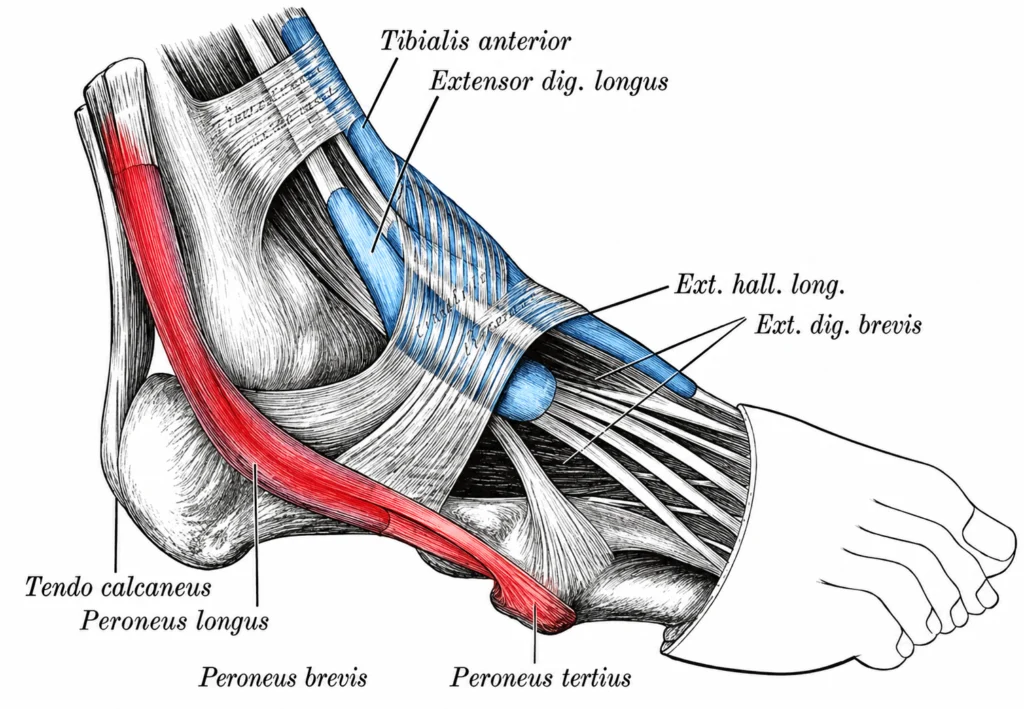
What Is Peroneal Tendonitis?
Peroneal tendonitis is irritation of the tendons that run along the outer side of your ankle and down into your foot. These tendons connect the peroneal muscles in your lower leg to your foot bones, and they play a key role in stabilising your ankle and controlling how your foot rolls during weight-bearing movement.
The condition usually develops gradually from repetitive overuse, though it can also appear suddenly after a fall or ankle injury. It's less common than other tendon issues like Achilles tendonitis, but it's frequently misdiagnosed initially — the pain pattern can resemble a sprain, arthritis, or a stress fracture, which is why an accurate assessment matters.
Symptoms to Watch For
If the tendon becomes damaged enough to partially or fully tear, symptoms escalate — sharp pain, a snapping sensation, and noticeable ankle instability. This is a sign the condition has progressed and needs prompt attention.
What Causes It
When to See a Podiatrist
Because the symptoms overlap with sprains, arthritis, and fractures, a proper exam — sometimes supported by imaging — is the only reliable way to confirm what's actually going on.
How Peroneal Tendonitis Is Diagnosed
A podiatrist will examine the ankle, check for tenderness and swelling, and assess your range of motion and gait. Imaging may be used to rule out other causes or confirm the extent of tendon involvement:
Treatment Options
Most cases improve significantly within three to four weeks of conservative care.