Morton's Neuroma: Causes, Symptoms & Treatment in Dwarka, Delhi
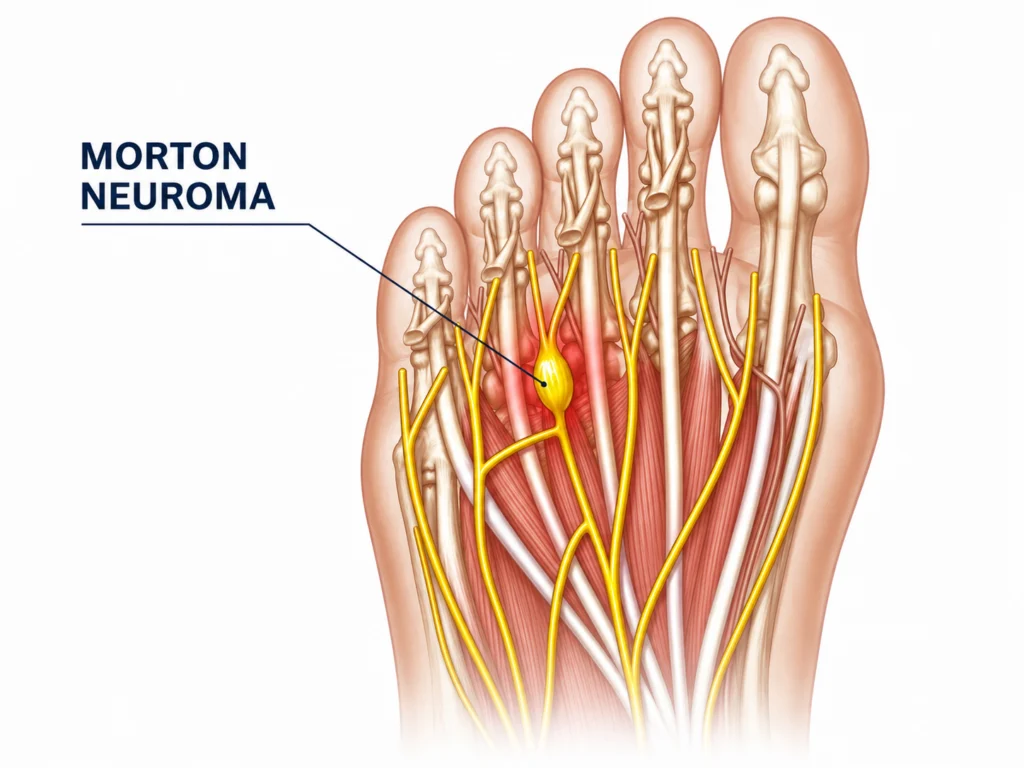
site of formation of morton's neuroma

What Is Morton's Neuroma?

Morton's neuroma is a thickened, irritated nerve in the ball of the foot — usually the one running between the third and fourth toes. Despite the name, it isn't a tumour or new growth. The nerve tissue itself swells and thickens in response to ongoing pressure, in a process closer to scarring than to abnormal growth.
It's a genuinely common condition — some estimates suggest roughly 1 in 3 people will develop one at some point. It also occurs more often in women, likely linked to footwear patterns.

Symptoms to Watch For

  • Sharp, burning, or stabbing pain in the ball of the foot, usually between the third and fourth toes
  • A sensation often described as standing on a pebble, marble, or bunched-up sock
  • Tingling or numbness spreading into the affected toes
  • Pain that worsens with walking, standing, or wearing narrow/high-heeled shoes
  • Relief when resting or removing the shoe
  • Symptoms that tend to build gradually — mild at first, more noticeable over time

What Causes It

The exact trigger isn't fully understood, but it's strongly linked to repeated pressure and compression on the nerve between the metatarsal bones. Common contributing factors:

  • Footwear — high heels and narrow, pointed toe boxes compress the forefoot and push toes together
  • High-impact activity — running, tennis, or other sports that repeatedly load the ball of the foot
  • Occupational strain — jobs that involve standing for long hours
  • Foot structure — flat feet, high arches, bunions, or hammertoes can alter mechanics enough to overload the nerve
  • Prior foot injury — trauma that changes how weight is distributed across the forefoot

When to See a Podiatrist

Get it assessed rather than waiting it out if:

  • Foot pain hasn’t improved after about two weeks of rest and footwear changes
  • Pain is severe, worsening, or keeps returning
  • You notice tingling, numbness, or weakness in the foot
  • Pain is interfering with normal daily activity

Left unaddressed, the nerve irritation can worsen over time and become harder to resolve without more intensive treatment — so earlier assessment generally means simpler treatment.

How Morton's Neuroma Is Diagnosed

A podiatrist can usually identify Morton's neuroma through a physical exam — checking symptom pattern, applying gentle pressure between the toe bones, and observing your gait. Imaging isn't always necessary, but may be used to rule out other causes:

  • X-ray — doesn’t show the neuroma itself, but helps rule out stress fractures or arthritis
  • Ultrasound — can visualise the thickened nerve tissue directly

How Treatment Works

Most people improve with non-surgical care; surgery is reserved for cases that don't respond to conservative treatment.

Conservative care (first-line)

  • Footwear changes — switching to shoes with a wide, deep toe box and low heel to relieve pressure on the nerve
  • Custom insoles or metatarsal pads — placed just behind the affected area to offload pressure on the nerve, rather than over it
  • Rest and activity modification — reducing high-impact activity while inflammation settles
  • Ice and anti-inflammatory medication — for short-term symptom relief

When symptoms persist

  • Corticosteroid injections — to reduce inflammation around the nerve when conservative measures aren’t enough
  • Surgery — considered if pain continues beyond several months despite other treatment; outcomes are generally favourable, with most patients reporting meaningful pain relief afterward

Prevention: The Role of Footwear and Insoles

Most people improve with non-surgical care; surgery is reserved for cases that don't respond to conservative treatment.

  • Choose shoes with a wide toe box and a low, stable heel
  • Avoid prolonged wear of narrow or high-heeled footwear
  • Use cushioned insoles if you’re on your feet for long periods or engage in high-impact sport
  • If you have flat feet, high arches, or a foot structure that predisposes you to pressure overload, custom-fitted insoles address the mechanical cause rather than just cushioning symptoms after they appear

Frequently Asked Questions

Does Morton's neuroma go away on its own?

No — unlike some minor foot irritations, it doesn’t resolve without addressing the underlying pressure. Left untreated, it can worsen and become more resistant to conservative treatment.

Is Morton's neuroma serious?

It’s not dangerous, but ongoing nerve irritation can lead to persistent pain or nerve changes if left unmanaged for a long time. Early treatment is straightforward in most cases.

Can insoles cure Morton's neuroma?

For many people, yes — insoles designed to offload the specific pressure point behind the affected nerve are often enough to resolve symptoms, especially when combined with footwear changes.

How is it different from metatarsalgia?

Both cause ball-of-foot pain, but Morton’s neuroma specifically involves nerve thickening (with tingling/numbness a common feature), while metatarsalgia is more about mechanical overload of the bones and joints. A podiatrist can distinguish between the two on exam.

Last Update

Reviewed By Dr Mohit Sharma - Clinical Head, Podiatrist, Foot Care Specialist on 22 July 2026

Book Your Appointment

Book a foot assessment with our team in Dwarka and get a clear answer on what’s causing your pain — and a plan to actually fix it.