Bow Leg Treatment in Dwarka, Delhi NCR | Bow Leg Specialist | Revamp Healthcare
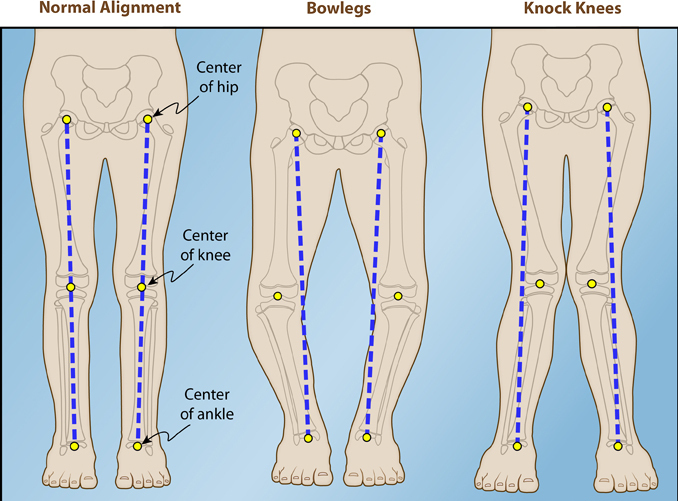
comparison of knock knee and bow legs

What are Bow Legs?

Bow legs, medically known as Genu Varum, is a condition where the legs curve outward at the knees while the ankles remain together, creating a noticeable gap between the knees. It is a common and normal finding in infants and toddlers due to their position in the womb.In most children, bow legs gradually straighten as they grow and usually resolve by 2 to 3 years of age. However, if the bowing persists, worsens, affects only one leg, or is associated with pain, it may indicate an underlying condition that requires evaluation.

Symptoms

  • Visible outward bowing of one or both legs
  • A noticeable gap between the knees when standing with the ankles together
  • In-toeing (pigeon-toed walking) in some children
  • Frequent tripping or clumsiness
  • Knee, ankle, or hip pain in older children or adults
  • Difficulty walking or running in severe cases
  • Uneven bowing between both legs

What Causes It

Bow legs are often a normal part of early childhood development. However, persistent or severe bowing may occur due to:

  • Normal developmental (physiological) bowing
  • Blount’s disease
  • Rickets caused by vitamin D or calcium deficiency
  • Skeletal dysplasia or other bone growth disorders
  • Poorly healed fractures
  • Growth plate injuries
  • Lead or fluoride poisoning (rare)

Risk Factors

  • Early walking
  • Childhood obesity
  • Family history of Blount’s disease
  • Vitamin D deficiency

When to see a Specialist

Consult a specialist if:

  • Bow legs persist beyond 2–3 years of age
  • One leg is more bowed than the other
  • The bowing is getting worse over time
  • Your child has pain, limping, or difficulty walking
  • There is a family history of bone disorders
  • Your child has delayed growth or other signs of vitamin D deficiency

Early evaluation helps identify underlying conditions and ensures timely treatment when needed.

How is it Diagnosed?

Diagnosis begins with a detailed clinical examination and assessment of your child's leg alignment, walking pattern, and medical history.
If the bowing persists beyond the expected age or appears abnormal, your clinician may recommend:

  • Standing leg alignment assessment
  • Gait analysis
  • X-rays to evaluate bone alignment
  • Blood tests if rickets or other metabolic bone disorders are suspected

Treatment

Treatment depends on your child's age, the severity of the bowing, and its underlying cause.

Observation

Most children younger than 2 years require only regular follow-up, as the legs usually straighten naturally during growth.

Non-Surgical Treatment

  • Custom knee braces or Mermaid Splint
  • Supportive footwear with custom insoles
  • Treatment of underlying conditions such as vitamin D or calcium deficiency
  • Physiotherapy to improve strength, balance, and walking mechanics

Surgery

Surgery is rarely required but may be recommended for severe or progressive deformities, persistent bow legs caused by conditions like Blount's disease, or adults with painful bow legs and significant deformity.

Recovery & Outlook

The outlook is excellent for most children with physiological bow legs. Their legs typically straighten naturally by 2–3 years of age without affecting normal growth or activity.When bow legs are caused by an underlying condition, early diagnosis and appropriate treatment help prevent long-term problems such as abnormal gait, knee pain, joint instability, and early arthritis.

Frequently Asked Questions

Are bow legs normal in babies?

Yes. Bow legs are a normal part of development in most infants and toddlers. The legs usually straighten naturally by 2 to 3 years of age as the child grows.

What causes bow legs?

Bow legs are commonly caused by normal developmental growth. Less commonly, they may result from conditions such as Blount’s disease, rickets, skeletal disorders, or previous bone injuries.

Can bow legs correct themselves?

Yes. In most children, bow legs improve naturally without treatment. If the bowing persists beyond the expected age or becomes more severe, further evaluation is recommended.

When does a child need treatment for bow legs?

Treatment may be needed if bow legs persist after 2–3 years of age, worsen over time, affect only one leg, cause pain or difficulty walking, or are due to an underlying medical condition.

Can adults have bow legs?

Yes. Some adults continue to have untreated bow legs from childhood, while others develop them due to arthritis or bone disorders. Persistent bow legs in adults can lead to knee pain, joint instability, and early osteoarthritis.

Can custom orthotics help bow legs?

Custom orthotics may help improve foot alignment and walking mechanics in selected patients, particularly when abnormal foot posture contributes to symptoms. However, they do not correct the bone deformity itself and are usually used as part of a comprehensive treatment plan.

Last Update

Reviewed By Dr Mohit Sharma - Clinical Head, Podiatrist, Foot Care Specialist on 22 July 2026

Book Your Appointment

Book a foot assessment with our team in Dwarka and get a clear answer on what’s causing your pain — and a plan to actually fix it.