Chondromalacia Patella Treatment in Delhi NCR | Expert Knee Pain Care | Revamp Healthcare
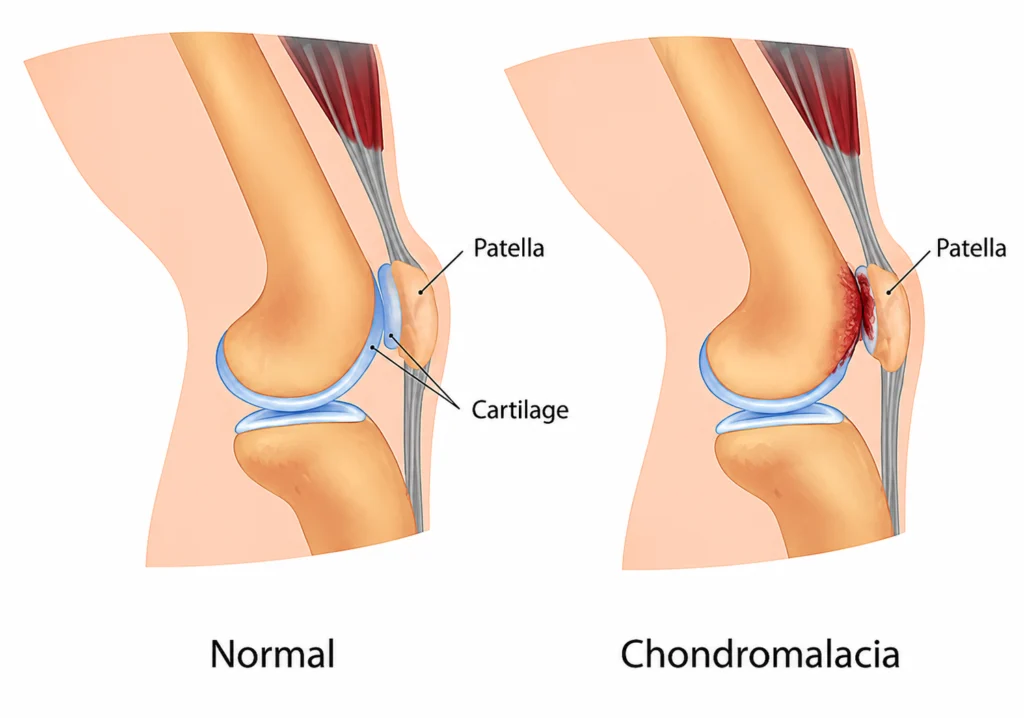
image showing degenerative changes for chondromalacia patella

Knee Pain While Climbing Stairs or Squatting? It Could Be Chondromalacia Patella

Chondromalacia Patella, commonly known as Runner's Knee, is a condition in which the cartilage underneath the kneecap (patella) softens and gradually wears down. This protective cartilage normally acts as a shock absorber, allowing the kneecap to glide smoothly over the thigh bone. When it becomes damaged, friction increases, leading to pain, inflammation, and difficulty with everyday movements.

Although commonly seen in runners and athletes, Chondromalacia Patella can also affect office workers, older adults with arthritis, people who are overweight, or anyone with poor lower-limb biomechanics.At Revamp Healthcare, we focus on identifying the underlying mechanical causes of knee pain through detailed gait and biomechanical assessment before recommending personalised treatment options.

Symptoms of Chondromalacia Patella

Common symptoms include:

  • Pain at the front of the knee or behind the kneecap
  • Pain while climbing or descending stairs
  • Discomfort during squatting, kneeling, or sitting cross-legged
  • Pain after prolonged sitting (“movie-goer’s knee”)
  • Grinding, clicking, or cracking sensations when bending the knee
  • Feeling of stiffness or occasional knee instability
  • Mild swelling around the kneecap in some cases

Symptoms often worsen with activities that repeatedly bend the knee.

Causes & Risk Factors

Chondromalacia Patella usually develops due to excessive pressure on the kneecap or improper tracking of the patella during movement.

Common contributing factors include:

  • Repetitive running, jumping, or cycling
  • Weak quadriceps, hip, or glute muscles
  • Muscle imbalance around the knee
  • Previous knee injury or patellar dislocation
  • Flat feet or excessive foot pronation
  • Poor lower-limb alignment
  • Overuse or sudden increase in training intensity
  • Osteoarthritis in older adults
  • Excess body weight

Poor foot mechanics can increase rotation through the lower leg, placing additional stress on the kneecap and surrounding structures.

Diagnosis

A comprehensive assessment helps determine whether Chondromalacia Patella is the source of your knee pain.

Evaluation include:

  • Clinical examination
  • Gait and biomechanical analysis
  • Assessment of patellar tracking
  • Foot posture evaluation
  • Muscle strength and flexibility testing
  • X-rays or MRI when cartilage damage or other knee conditions need to be assessed

Early evaluation helps identify underlying conditions and ensures timely treatment when needed.

Can Custom Insoles Help?

Custom orthotic insoles do not directly treat damaged cartilage, but they may play an important role when abnormal foot mechanics contribute to excessive stress on the knee.
People with flat feet, excessive pronation, poor foot alignment, or unstable ankle mechanics may experience increased rotation through the shinbone (tibia), which can alter kneecap tracking and increase pressure on the patellofemoral joint.

Following a detailed biomechanical assessment, custom foot orthoses may help by:

  • Improving foot alignment
  • Controlling excessive pronation when appropriate
  • Reducing rotational stress transmitted to the knee
  • Improving lower-limb biomechanics
  • Enhancing comfort during walking, running, and daily activities
  • Supporting rehabilitation alongside physiotherapy

Not every patient requires custom orthotics. They are recommended only when a biomechanical assessment identifies foot mechanics as a contributing factor.

Frequently Asked Questions

Can Chondromalacia Patella heal without surgery?

Yes. Most people improve with conservative treatment, including activity modification, physiotherapy, strengthening exercises, and correction of contributing biomechanical factors.

Can custom insoles help Chondromalacia Patella?

If poor foot biomechanics, flat feet, or excessive pronation are contributing to abnormal knee loading, custom orthotic insoles may help reduce stress on the knee. They work best as part of a comprehensive treatment plan rather than as a standalone treatment.


Are custom orthotics better than over-the-counter insoles?

Over-the-counter insoles provide general cushioning, while custom orthotics are designed specifically for your foot shape and walking pattern. When abnormal biomechanics contribute to knee pain, custom orthotics often provide more precise support.

Is Runner's Knee the same as Chondromalacia Patella?

The terms are often used interchangeably, although “Runner’s Knee” may also refer more broadly to patellofemoral pain syndrome. Chondromalacia specifically describes damage or softening of the cartilage beneath the kneecap.

When should I see a specialist?

Seek professional evaluation if knee pain lasts for more than a few weeks, worsens with activity, causes clicking or grinding, or limits your daily activities.

Can poor footwear make Chondromalacia Patella worse?

Yes. Worn-out or poorly fitted shoes can alter lower-limb mechanics and increase stress on the knee. Appropriate footwear, combined with custom orthotic insoles when indicated, may help improve alignment and reduce excessive joint loading.

Last Update

Reviewed By Dr Mohit Sharma - Clinical Head, Podiatrist, Foot Care Specialist on 22 July 2026

Book Your Appointment

Book a foot assessment with our team in Dwarka and get a clear answer on what’s causing your pain — and a plan to actually fix it.