Metatarsalgia: Causes, Symptoms & Treatment in Dwarka, Delhi
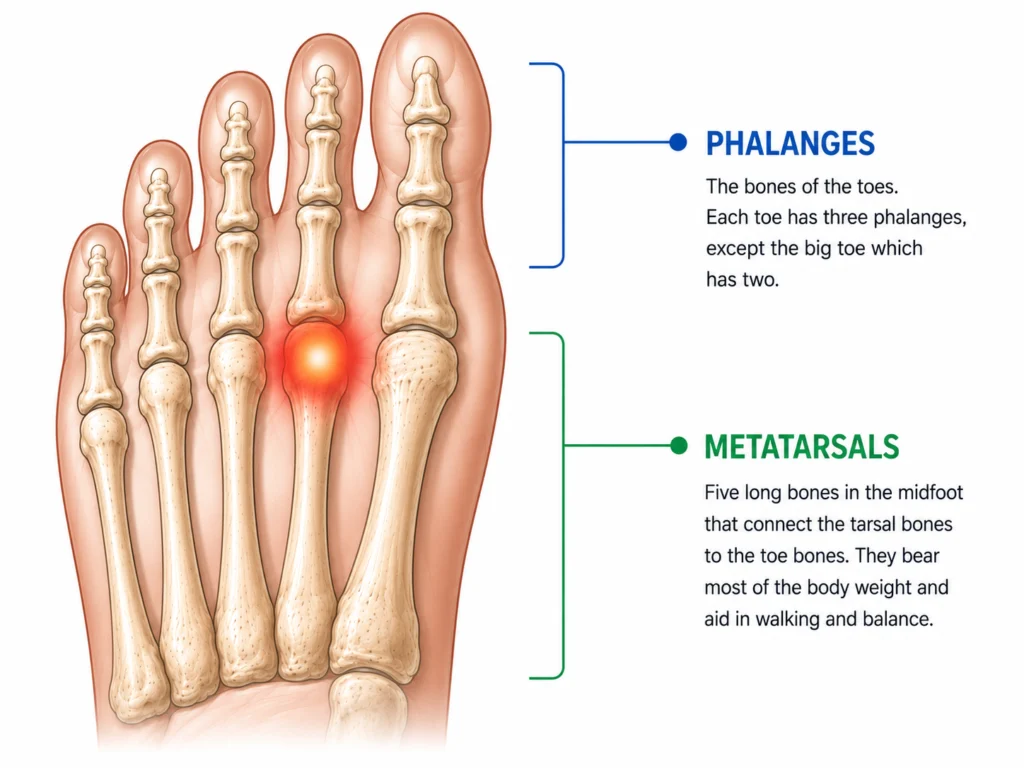
metatarsalgia pain in the forefoot

What Is Metatarsalgia?

Metatarsalgia is pain and inflammation in the ball of the foot — the area just behind your toes, where the metatarsal bones (the five long bones of the foot) bear the brunt of your body weight with every step.
Normally, these bones share load evenly. Metatarsalgia develops when that balance breaks down and one or more metatarsal heads take on more pressure than they're built for. It's not a single disease — it's a description of where the pain is, with several possible causes underneath.

Symptoms

  • Sharp, aching, or burning pain under the ball of the foot
  • Pain that worsens with standing, walking, or running — especially barefoot on hard floors
  • A sensation often described as “walking on a pebble” inside the shoe
  • Occasional numbness or tingling radiating into the toes
  • Pain that eases with rest but returns with activity

What Causes It

Metatarsalgia rarely has one single cause — it's usually a combination of foot mechanics, footwear, and activity load.

Foot structure and mechanics

  • A high arch, which shifts extra pressure onto the metatarsal heads
  • A second toe longer than the big toe, redistributing weight abnormally
  • Hammertoes or bunions, which change how weight transfers across the forefoot
  • Thinning of the natural fat pad under the foot with age

Footwear and activity

  • High heels or narrow, poorly cushioned shoes that concentrate pressure on the forefoot
  • High-impact sports like running or jumping, especially in worn-out shoes
  • Excess body weight, which increases load on the forefoot with every step

Underlying conditions

  • Stress fractures in the metatarsal bones
  • Morton’s neuroma — a thickening of tissue around a nerve, usually between the third and fourth toes, that mimics metatarsalgia symptoms
  • Inflammatory arthritis, such as rheumatoid arthritis or gout
  • Diabetes, which can cause nerve-related foot pain and altered pressure sensation
  • Calluses that have already formed from uneven weight-bearing, which then worsen the imbalance further

When to See a Podiatrist

Occasional forefoot ache after a long day is common and usually not concerning. But it’s worth getting assessed if:

  • Pain persists beyond a few days despite rest
  • Burning or sharp pain doesn’t improve after changing footwear or activity
  • You notice numbness, tingling, or a “pebble in the shoe” sensation
  • You have diabetes or nerve issues and notice any new foot pain
  • Left unaddressed, the altered walking pattern from metatarsalgia can shift strain to the other foot, or up into the hip and lower back — so early assessment prevents a small problem from becoming a compensatory one.

How Metatarsalgia Is Treated

Because metatarsalgia has multiple possible causes, effective treatment starts with identifying which one applies to you — not just treating the symptom.

  • Assessment — a podiatrist examines foot structure, gait pattern, and footwear to pinpoint where and why pressure is concentrating
  • Offloading the pressure — metatarsal pads or domes placed just behind the affected area to redistribute load away from the painful metatarsal head
  • Custom insoles — arch-supporting, pressure-mapped insoles correct the underlying mechanical imbalance rather than just cushioning the symptom
  • Footwear correction — moving away from narrow toe boxes, high heels, or worn-out soles
  • Addressing the root driver — where a stress fracture, neuroma, or arthritis is involved, further targeted treatment is planned around that diagnosis

Rest, ice, and over-the-counter anti-inflammatory medication can ease symptoms short-term, but they don't correct the mechanical cause — which is why pain often returns once activity resumes.

Prevention: The Role of Footwear and Insoles

  • Choose footwear with a wide toe box and shock-absorbing soles
  • Avoid high heels or worn-down athletic shoes for extended periods
  • Maintain a healthy body weight to reduce forefoot load
  • If you have a high arch, longer second toe, or a history of calluses under the ball of the foot, custom insoles built for your specific foot shape can prevent recurrence rather than just managing flare-ups

Frequently Asked Questions

Is metatarsalgia serious?

Usually not — most cases respond well to footwear changes and pressure redistribution. It becomes a concern mainly when pain persists, worsens, or occurs alongside diabetes or nerve symptoms.

Can insoles alone fix metatarsalgia?

Often significantly, when the cause is mechanical — custom insoles that offload the affected metatarsal head address the root pressure imbalance, unlike generic cushioned inserts.

What's the difference between metatarsalgia and Morton's neuroma?

They can feel similar, but Morton’s neuroma is a specific nerve-tissue thickening, usually between the third and fourth toes, and may need targeted treatment beyond pressure offloading alone. A podiatrist can distinguish between the two on examination.

Will metatarsalgia go away on its own?

Mild cases often ease with rest and better footwear. Persistent or recurring pain usually signals an underlying mechanical cause that needs to be corrected, not just waited out.

At Revamp Healthcare, Dwarka Sector 14, our podiatry team assesses gait and foot structure to identify the specific cause behind ball-of-foot pain, and prescribes custom insoles designed around your individual pressure pattern.

Last Update

Reviewed By Dr Mohit Sharma - Clinical Head, Podiatrist, Foot Care Specialist on 22 July 2026

Book Your Appointment

Book a foot assessment with our team in Dwarka and get a clear answer on what’s causing your pain — and a plan to actually fix it.